Categories :
Share This :
FREE SHIPPING ON ORDERS OVER $150
FAST SHIPPING WITH EVERY ORDER
FREE SHIPPING ON ORDERS OVER $150
FAST SHIPPING WITH EVERY ORDER

For our next installment of the ABC’s of mycology, we have to do something a bit different, we have to skip a letter! J is the first letter I’ve found that really has no mycology terms related to it, especially nothing we’ve discussed previously, so we’ll be skipping that letting! So, in this installment we’ll be covering three new terms, K will give us an overview of King Oyster Mushrooms, L will provide information on Liquid Culture, and M will give us information on Monokaryons. Let’s get started!
King Oysters
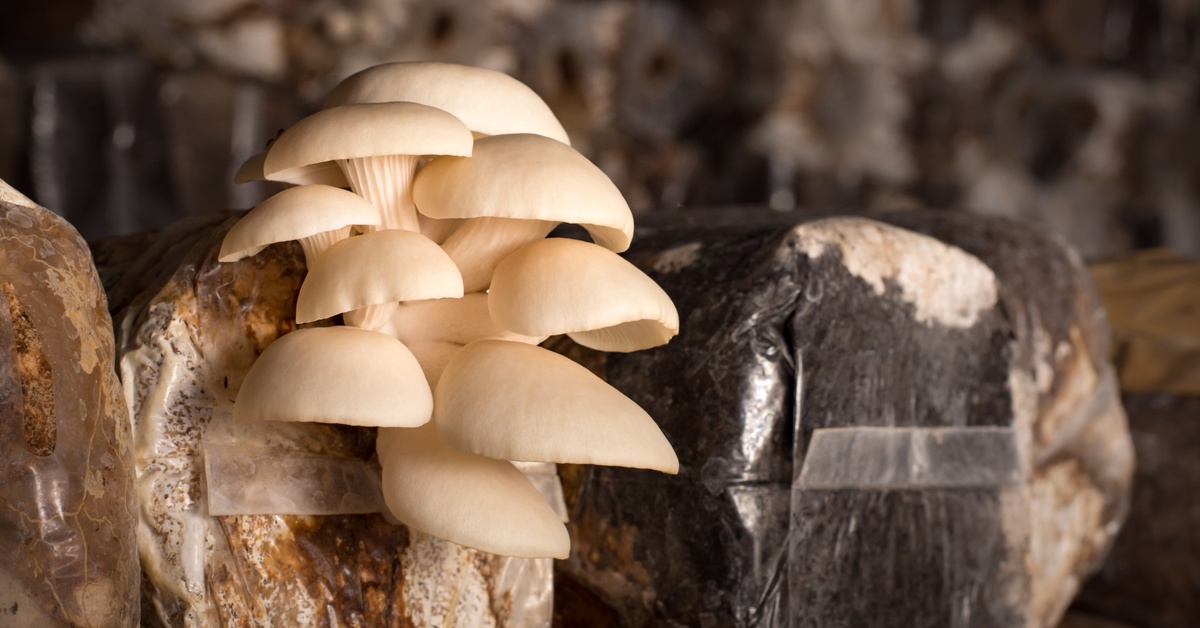
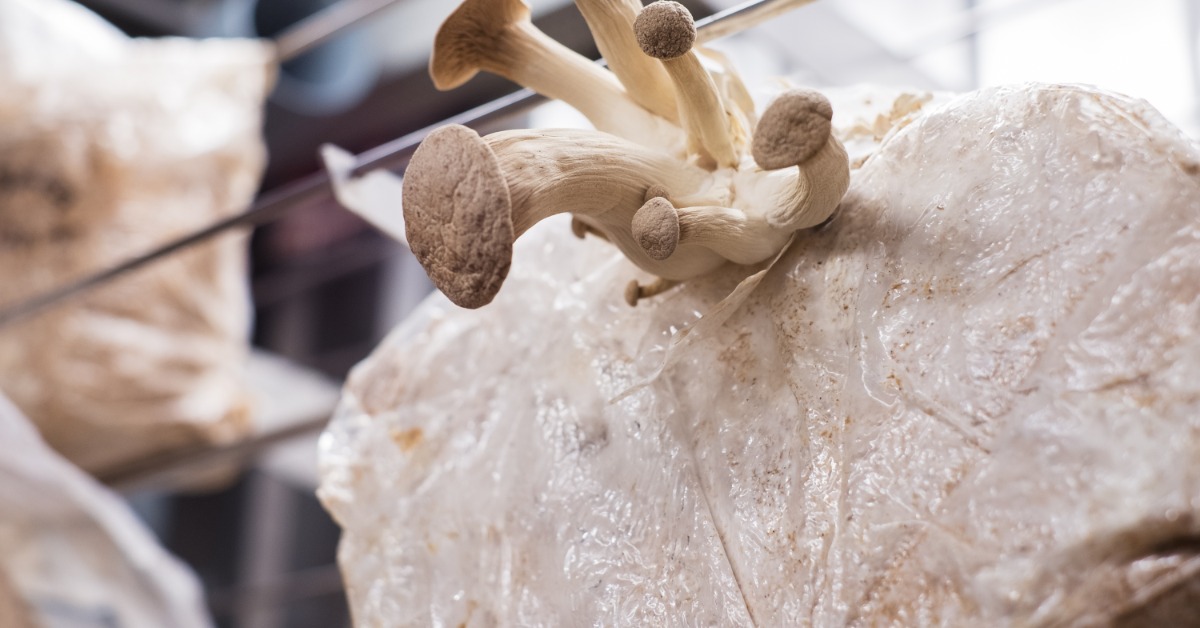
King oysters are a species of mushroom found all over the world and used frequently in culinary recipes, to make various dishes including soup stock, and mushroom jerky, and occasionally used as a seafood alternative such as replacing scallops. King oysters tend to grow in tall stalks, with gills at the top of the stalk with a dark cap growing from the center of the stalk. The mushrooms tend to be very dense and can be quite thick, making them ideal for cutting into slices for mushroom jerky, or into thick pieces to substitute for scallops.
King oysters are best grown on a hardwood-based substrate, such as our sawdust or masters mix that we offer here at Booming Acres. The mushrooms are similar to other oyster mushrooms in that they like high humidity and lower temperatures for growing, typically growing in the high 50’s to low 60’s. Their mycelium matches other oyster varieties, spreading quickly and becoming dense and strong in older growth as new growth spreads. Your average grow of king oysters will take anywhere from 4 weeks up to 8 weeks, depending on your environmental conditions.
When using king oysters for making mushroom jerky, you can slice strips of the mushrooms vertically, then marinate these strips for at least 12 hours before placing them in an oven set to at least 350 degrees until they become firm and crisp. Mushrooms jerky can be a great alternative to traditional meat jerky, it’s vegan friendly and has plenty of nutrition and can be quite tasty! When using king oysters for scallops, cook the mushrooms the same way you would scallops, fry them in a hot pan with oil, allowing each side to become brown and soft before flipping. Baste generously with butter, then serve with salt and seasonings of your choice.
Liquid Culture
Liquid culture is important for mycologists looking to expand their culture library. One of the easiest ways to inoculate your projects is to expand mycelium into a liquid culture, draw that culture up into a syringe, then inject into your grain. We recommend using a liquid culture that is at least 4% sugar by weight, meaning if you are making 600ml of solution to use at least 24 grams of honey, karo, or any other sugar syrup for your culture. You can also add things like yeast extract, potato starch, peptides, or food coloring to your culture, though this is not necessary.
When making liquid culture, you simply add your sugar to a glass vessel, then add your water, sterilize using a pressure cooker for at least 20 minutes, then allow this mixture to cool. Once your liquid culture is at least cooled down to room temperature, you can inoculate your culture. To do this it’s best to work inside of a SAB or ideally in front of a flowhood. Remove the lid from your vessel and place a small piece of agar, mushroom tissue, or clean colonized grain into your vessel and replace the lid. We recommend shaking vigorously after adding your mycelium to your liquid culture to help break off pieces of living mycelium, which will then grow in the culture, speeding up the process of colonizing your liquid.
Once your liquid culture has sat for at least 2 weeks, you should see plenty of mycelium floating around in your liquid when you gently shake your vessel. This shows you that you have successfully colonized your liquid and you can now test a sample before using it to inoculate grain. To do this, draw up a syringe of the liquid, being sure to get some of the mycelium inside of the syringe as you do so. Next, add a few drops to some agar, by squeezing the sides of your syringe to get a bit of liquid out of it. Store your agar for at least a week, then check it to see what’s growing. If you do not see any signs of contamination, you’re good to use your liquid culture for inoculation! If you see any signs of contamination you will need to either check your aseptic technique and make your liquid culture again from scratch, or you can try testing on more agar to see if a mistake was made during the testing process.
The recipe we recommend for making liquid culture is as follows:
24 grams of Karo or Honey
1 gram of yeast extract
3 grams of potato starch
600ml of water
Stir or shake until thoroughly dissolved.
Pressure cook at 15 psi for 20 minutes (no longer than this!)
If using mason jars for liquid culture, this will make 1 quart jars worth of liquid culture, and will yield at least 60 10cc syringes of material! You will want to either make or purchase lids that are specifically made for handling liquid culture for this process, and you will want to work in front of a flowhood, or in a still air box.
Monokaryons
Monokaryons are useful when breeding fungus. Monokaryons are one half of a breeding pair, when two are combined you end up with a dikaryon, which is how you end up with genetic crosses of fungus.
Monokaryons are selected via a microscope, they are single genetic strains that only contain one parent part of the fungal organism. These can be selected through a microscope, selecting an identified monokaryon that has not latched onto another monokaryon, then adding this to another monokaryon to form a dikaryon which will then be a new genetic variation that will be a cross of the two fungi.
When breeding mushrooms, it will take repeated selection to be able to transfer material that is a monokaryon, with each transfer needing to be verified to be mostly monokaryotic before adding this mycelium to another transfer that is also verified to be monokaryotic. Once the two monokaryons meet, they will clamp onto each other, joining and sharing genetic information. Once this joining has been made a dikaryon is formed and transfers of this dikaryotic fungus can be made to expand the dikaryotic breed. From here, the dikaryon can be verified again via microscope, once verified the material can be used to inoculate grain, liquid culture, or more agar, then grown out to fruiting to verify that the breeding process has been successful.
When breeding monokaryotic fungi, it is important to remember that species selection is important, you cannot breed two different species if the species are too far differentiated from each other. Breeding of monokaryons is becoming more widely available and these breeding lines are being used to form trusted crosses, compared to the old fashion method of throwing two similar species or strains onto an agar sample and growing out the connecting tissue hoping for a cross to have taken place. With this in mind it is still important to verify that the cross you are purchasing or trading for is coming from a source that is able to provide evidence of the monokaryotic crossing of two varieties, which should be easily provided if the vendor is actually doing proper breeding methodology.